How to Get Video Cited by ChatGPT: Build a Page Worth Using
Give the video a useful home with a clear answer, stable media, and a full transcript. Then measure retrieval and citations separately.
Give the video one public page that explains what it contains and why it matters. Put the video on that page, then make every important part easy to reach and verify.
That does not guarantee a ChatGPT citation. It gives ChatGPT Search and other systems a real page to discover instead of a video file with no useful context.
The Video Needs a Page, Not Just a File
OpenAI says any public website can appear in ChatGPT search when the site allows OAI-SearchBot and its host accepts requests from OpenAI's published searchbot addresses. Placement is not guaranteed. The current publisher guide does not name a separate rule that guarantees video citations.
That leaves a publisher with one honest move: build the best public page for the video and make the evidence easy to check.
Seven Parts of a Useful Video Page
- A direct answer. Tell the reader what the video will help them understand before asking them to press play.
- A visible player. Do not make a person click a hidden control before the player exists in the rendered page.
- A stable poster. Use one useful preview image at a public URL that will still work next month.
- Captions and a transcript. Captions help the viewer follow the video. A visible transcript also gives the page readable text that can be checked and quoted.
- Clear sources and credits. Name the publisher, speaker, supporting sources, and publication date.
- One canonical URL. Keep the page identity clear even when the same video is shared elsewhere.
- Matching VideoObject data. Describe the same title, description, poster, duration, upload date, and media file that the page shows.
The parts work together. A transcript without a useful page is loose text. Schema that disagrees with the page is not a shortcut. A video file with no source or publisher identity gives an answer system less reason to trust what it found.
A Live Video Page We Can Inspect
AI Now Guide gives us a real example because we built the page and can inspect the whole result. The article The Biggest Change AI Brings Isn't Speed publishes an original animated explainer read by Kodi.
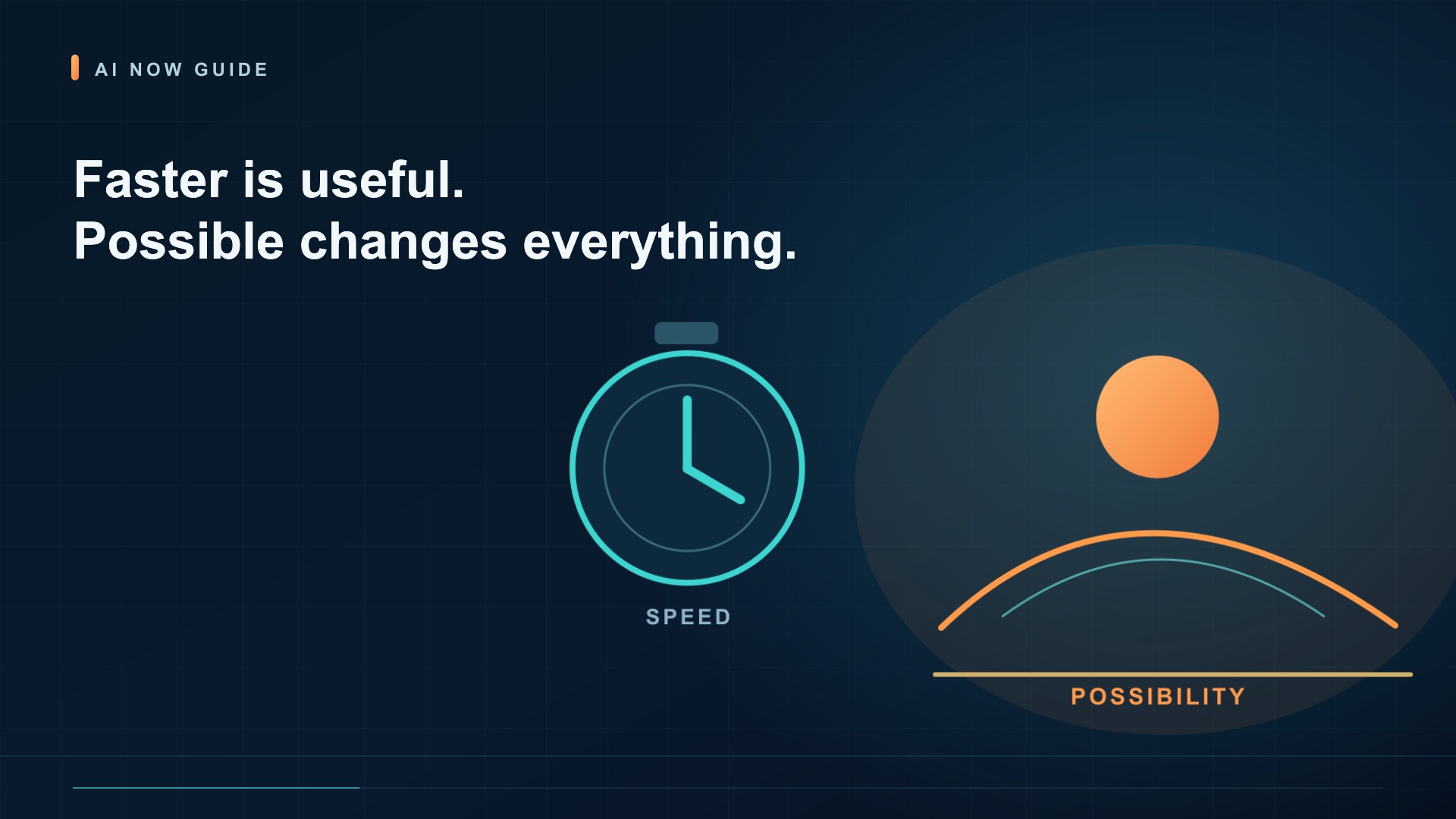
The page is useful without the video because the article carries the full idea. The video makes that idea easier to watch and share. Neither version depends on hidden text or an unsupported promise about AI citations.
| Published part | What a person or crawler receives | What it proves |
|---|---|---|
| Public article page | One title, one canonical URL, the full article, the player, and visible credits | The video has a stable source page |
| MP4 video file | The complete playable video at a stable URL | The media file is publicly reachable |
| Poster image | A clear preview with the video's real subject | The player has a stable visual identity |
| VTT captions | Timed English captions for the spoken narration | The player can display synchronized words |
| Visible transcript | The complete narration in readable page text | The spoken explanation can be checked without playing the video |
Those checks prove that the publishing pieces exist. They do not prove that ChatGPT selected the page, watched the video, or cited it in an answer.
What OpenAI Actually Documents
OpenAI's current crawler documentation separates search from model training. OAI-SearchBot is the search crawler. GPTBot controls potential training use. A publisher can allow one without treating the other as the same decision.
OpenAI also publishes the searchbot IP ranges that a host or security layer may need to allow. That matters because an open robots.txt file cannot help when a firewall blocks the crawler before it reaches the page.
ChatGPT search referral links include utm_source=chatgpt.com. That gives publishers a useful way to track a visit from a linked ChatGPT result. A referral still does not prove that every related answer cited the page.
Where Google Video Guidance Helps
Google's video guide is not a ChatGPT citation formula. It is still useful because it explains how to publish a video page that can be found and understood.
Google recommends a visible player, a valid thumbnail, stable media URLs, consistent metadata, and a page that is already indexable. It also distinguishes a dedicated watch page from an article where the video supports the main story.
The AI Now Guide example is an article with a video companion. Watching the video is not the only reason to visit. A publisher who wants a dedicated watch page would make the video the main purpose of that page and keep its title and description unique.
Build, Publish, Connect, Measure, Improve
- Build. Create one page that answers the question and carries the video, poster, captions, transcript, credits, sources, and matching VideoObject data.
- Publish. Give the page one canonical URL. Keep the page and its media files publicly reachable.
- Connect. Link the video page from the article, guide, product, or topic page that gives it meaning.
- Measure. Track crawler requests, ChatGPT referrals, human visits, and saved citation examples as separate records.
- Improve. Fix the part that failed. Do not rewrite the whole page because one crawler missed a file or one test answer used another source.
The order matters. Measurement cannot rescue a weak page. Schema cannot rescue a missing transcript. A transcript cannot rescue a video that never gives the reader a reason to care.
How to Verify a ChatGPT Video Citation
Save the exact question, the answer, the linked source, the ChatGPT product, and the date. That record proves one observed citation at that time.
A request from OAI-SearchBot proves retrieval. A visit carrying the ChatGPT referral tag proves a click from a tracked result. A saved answer with the page linked as a source proves one citation. Keep the three receipts separate.
This is the same rule we use across the portfolio: do not turn access into attention or attention into proof. Publish the strongest page you can, then record what actually happened.
Common Questions
Does VideoObject schema guarantee a ChatGPT citation?
No. VideoObject data can describe the video and its publisher, but OpenAI does not document it as a citation guarantee.
Should a video page include a transcript?
Yes when the transcript is accurate and useful. It lets people read the spoken explanation and gives the page visible text that can be checked and quoted.
Is uploading a video to YouTube enough?
A YouTube page can help people discover the video. An owned page adds your canonical URL, publisher identity, supporting explanation, sources, and direct measurement.
How do I know whether ChatGPT cited my video page?
Save the exact question, answer, linked source, ChatGPT product, and date. That proves one observed citation at that time.